

After speaking with a conservative nationalist in my last interview, I wanted to hear from someone on the opposite end of Gen Z’s political spectrum. What surprised me wasn’t where they disagreed—it was where they agreed.
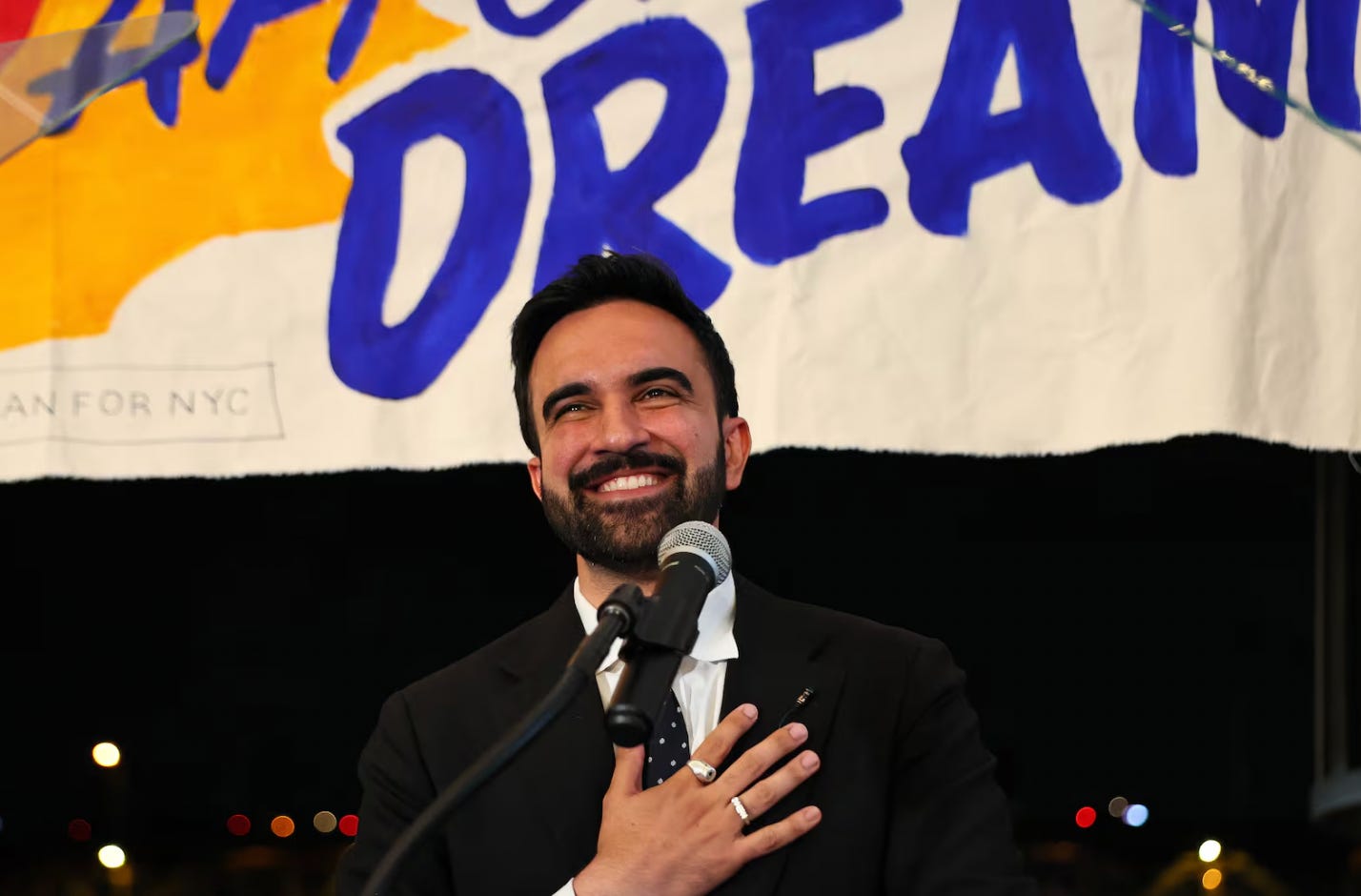
In the second installment of my series to better understand the politics of Gen Z, I sat down with a young progressive student who is very dissatisfied with the establishment of the Democratic Party, and sees Zohran Mamdani as a more hopeful option for the future.
Here he is:
Who are your favorite politicians right now, and why?
“Right now, I would say that most of my favorite politicians aren’t elected yet, and the ones that are elected I still don’t 100% agree with.
However, my favorite is Zohran Mamdani. I like Zohran. He’s a very nice guy, and I met him once too. He always has a smile on his face, and honestly, we need more “aspirational politicians” in the U.S. because he gives off a sense of positivity whenever he’s in a room, even if I think some of his policy objectives are ambitious and, in some cases, flawed. That said, some of his backers concern me, and there are parts of his supporter base whose views I don’t share.
I want a leader that just talks like a normal guy. No mincing of words, no “we are diligently working on serving all xyz constituents,” just say things how they are, good or bad.
With certain progressives, I would love for them to focus more on economics and less on the whole “defund the police“ culture wars and gender politics. It really distracts from the core message of the real divide in this country: to quote James Talarico, “top versus bottom.“
Who do you hope will be the President in 2028?
“While I don’t support anyone in particular at the moment, I just hope JD Vance or Kamala Harris isn’t elected. To me, those two represent the two dominant political tendencies shaping the country today: on one side, right-wing crypto billionaires who support politicians willing to accept their funding and advocate for their priorities; on the other, establishment Democrats who, sensing their waning influence within the political landscape, often elevate candidates who can be presented as diverse or representative in an effort to appeal to progressive voters. In my view, despite their different messaging and presentation, both parties ultimately advance many of the same underlying priorities.”
In my first interview, I talked to a self-identified conservative nationalist. This time, a Mamdani-supporting progressive. Both said the same thing about how to appeal to Gen Z. They want concise and direct messaging. They want social media engagement. They want a personable attitude. They want to feel seen. They don’t want another career politician.
Both also expressed frustration with the establishment of their respective parties. They don’t like seeing candidates that are perceived as expressing the interests of corporations and special interests. They want a more populist version of politics: one in which politicians respond directly to the concerns of the people, act on them, and move on.
On both sides of the political spectrum, support for the establishment is dying among young people. In recent elections, young people consistently favor the more populist, anti-establishment candidate. This phenomenon is true regardless of party, state, or office. Why? Because young people feel that the establishment doesn’t stand for anything, while the insurgents do.
America in 2026 does not have the same ideological makeup it once did. This is especially true among young people. Gen Z is becoming more anti-establishment, more skeptical of foreign intervention, and more distrustful of the corporate elite.
This is not an endorsement of any particular worldview. This is simply an analysis of political trends among Gen Z.
Follow me on X for more like this: https://x.com/SamsonCain17