

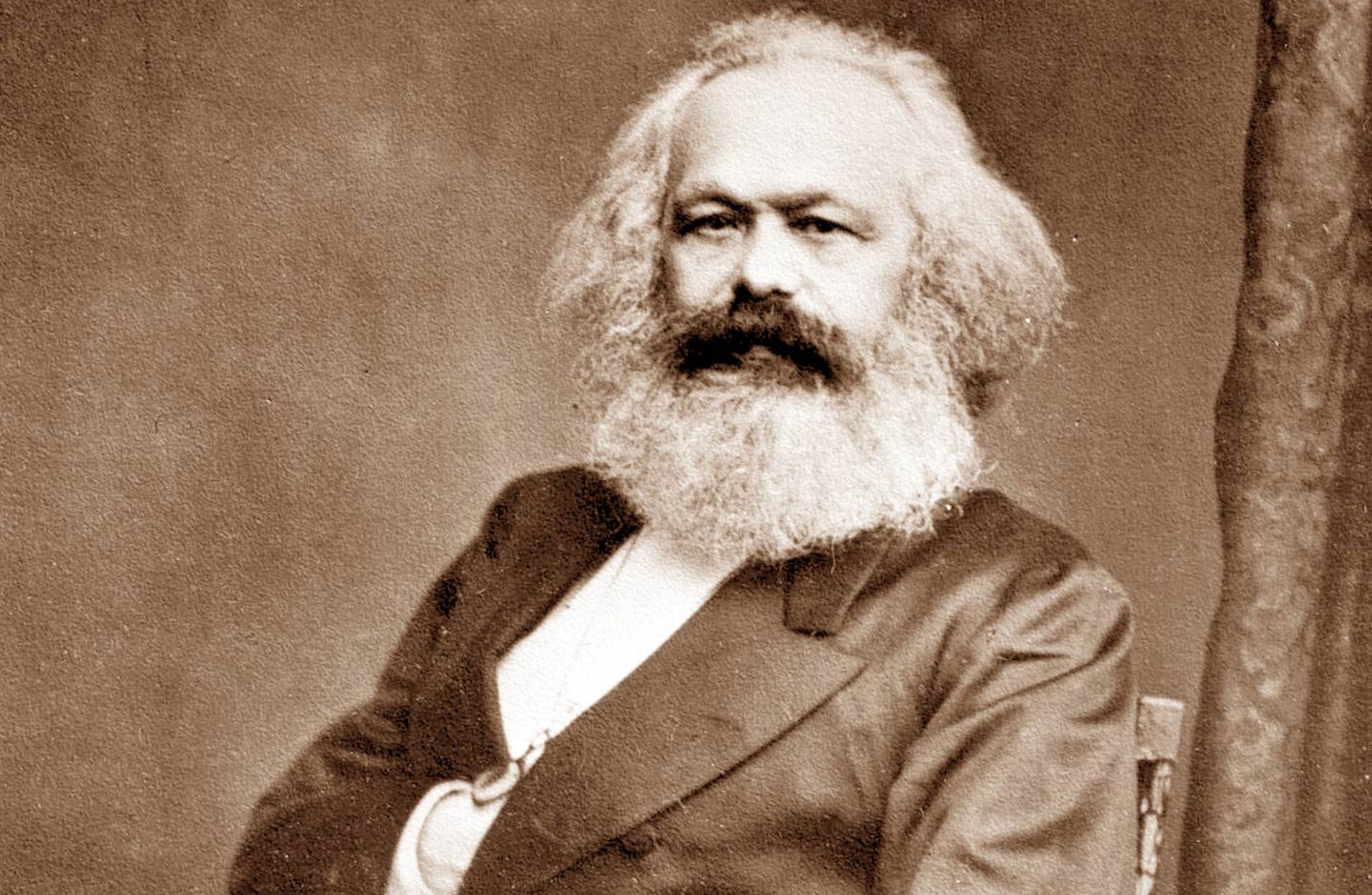
In the latest installment of my series exploring the political beliefs of Gen Z, I sat down with a young American who identifies as a communist.
It’s not everyday that I get to speak to communists, so we talked for a long time.
We discussed what led him to communism, his views on capitalism and private property, the politicians he supports, his criticisms of the American economic system, and what he considers the strongest arguments against his own beliefs.
I also challenged him a bit at the end of the conversation.
Here it is:
How did you come to see the world in the way you do?
“When I was young, around 14, I read Marx and The Communist Manifesto. I agreed a lot with a lot of ideas he was writing. So I then expanded from that. I started reading authors like Engels, Lenin, Stalin, and the late great Michael Parenti.
Michael Parenti specifically greatly shifted my worldview. I began to see things from a more leftist perspective, even communist.
I’d say that reading leftist authors definitely is what contributed the most to my shift in worldview.”
And what does the word “communist” mean to you?
“I would say communism is a stateless, classless society, with one of the key elements being the lack of private property ownership. I think that’s how Marx put it, so I’ll go with that.”
What things in your own life have you felt were so flawed or wrong or backwards that led you to have an open mind to this ideology that the vast majority of Americans see as even evil or very taboo?
“I think that I’ve seen economic inequality grow worse and worse. I’ve seen people my age, or a little bit older than me, struggle financially in life, like struggling to get their first house, struggling to pay rent, struggling with just basic necessities because of how unequal the wealth distribution we have in America is.
I know that there’s a chance I won’t be able to move out or afford my own home on my own income because of how our economy has changed.
Beyond that, I think that looking at how America has failed in terms of a social safety net, such as universal health care, things that other Western countries have developed successfully, and seeing that people here in my own country struggle with things that we could definitely afford, yet choose not to—it’s something I just didn’t understand.
I think that people have this fear of socialism and communism as this Red Scare-era taboo or like a boogeyman, when in reality it’s just workers having the work they put in go back to them rather than being stolen by these greedy corporate overlords.
More recently, like the last five years, the expansion of AI, like data centers stealing clean water from people so that they can further the interests of these mega corporations, I think is just disgusting to watch.
As I mentioned, the wealth inequality—like some of the world’s first people with over $100 billion, recently the world’s first trillionaire—I think it’s utterly unacceptable.
So I think that the growth—just to summarize shorthand—I think the growth in wealth inequality, and watching people around me struggle, is why I became a communist.”
I’m sure, as you know, if a politician right now were to run and say, “Hey, I’m a communist,” they would not do very well in an election. So, from your perspective, given these beliefs, what politicians or political factions do you align yourself with?
“I think that in America, the most viable party line that I view myself as most bordering on is the DSA.
I think the DSA advocates for a lot of policies I agree with, like Medicare for All, worker solidarity. To be clear, they’re not as radical as I am.
But I think that, given the state of America when it comes to the word communism, they are the best option to move forward an agenda that benefits the working class.
I am more than happy to vote for someone who is not an outright communist, as long as they are objectively implementing policies that do help the working class, like Medicare for All or universal child care.”
Do you see yourself moving out of the country at some point and going to a place where those options are more feasible?
“No, I don’t think so.
I was born in America. My parents were born in America. I think that leaving somewhere because you disagree with the politics, especially in a country like America, is a bit ridiculous.
I think that America is flawed, but that those flaws do not mean that it is unsavable or unsalvageable.
We’ve seen democratic socialist victories in New York and in the Democratic primary in Michigan. I think that positive change can and will happen, and that leaving is like betraying your country.
Because, given that I’m an American and my parents are American, I feel like I have this duty to try and move the country in a direction that I think will be better for its citizens.
So I don’t think that I would leave.”
If you were to argue the opposite position and give your best argument against your own beliefs—your best argument against a communist system—what would you say?
“If you are able to start a successful company and work hard and build, then you should be able to keep the profits from that company, and that the idea that it should go to someone who maybe hasn’t worked as hard as you, or might be lazy and living off welfare, or living off the social services provided, is not fair.
Like, you worked, therefore you should get the money that you earned. I think that would be the most logical argument against my position.”
And you disagree with that, why?
“I do, I think that there’s no way to accumulate a ton of money under capitalism that does not involve exploiting your workers.
Like, you are essentially paying your workers less than they produce in order to accumulate massive amounts of wealth.
There is some issue with the idea of people living off the welfare system—but I think that that amount of people is greatly outweighed by the amount of people who are hardworking who could be helped by redistributing wealth.”
How do you make the jump from redistribution of wealth to abolishing private property in its entirety?
“How do I make the jump from redistributing wealth to abolishing private property?
I think we’ve seen societies without private property do amazing. The Soviet Union I’ll give an example of.
I disagree with the characterization of the Soviet Union. I think the Soviet Union lacked private property, and it was able to implement government housing, guaranteed workforce. Like, these things that, in my opinion, progress society a lot further.
Beyond that, I think that private property as a concept leads to exploiting workers. When you own the machines, then you can pay your workers less than they produce, then you steal their surplus labor value.
I feel that private property is a direct connection to worker exploitation. So I think that’s how I make that jump.
I think that the two arguments are logically separated. I think that redistribution of wealth is more: if we have enough, why don’t we provide for those who don’t have enough?
Whereas the argument against private property, in my mind, is one of the workers, regardless of their economic status, being exploited.”
And how would you respond to the argument that the system that has lifted the most people out of poverty worldwide has been capitalism?
“I would say that capitalism has put the most people in poverty. I think I disagree with the concept.
I think that the global capitalist system we have starves millions every year by failing to equitably distribute food and water and other resources.
We’ve seen the Global South be exploited and underdeveloped by capitalist forces so that their markets can remain cheap and their labor can be underpaid.
I think that when socialism has been put into practice, it has lifted hundreds of millions out of poverty, in both underdeveloped and developed countries.
China, for example. I know that there has been economic reform since the days of Mao, but the CCP was successful in lifting hundreds of millions out of poverty.
The USSR was successful in rebuilding after World War II and building pre-World War II to fight the Nazis.
I think that the only system that has lifted up without putting millions down is socialism, and capitalism has utterly failed.”
It’s interesting you say that. My question, though, wasn’t subjective or up to interpretation; it’s a fact that the system of capitalism has lifted the most people out of poverty. So, my question is: how would you respond to that fact?
“In the West, it has lifted people out of poverty. That’s true.”
No, worldwide.
“Oh, I understand.
Like, why do we have food insecurity in the Global South, then, if these countries exist under a capitalist system, yet food is not being distributed equitably?
I believe we make, like, 1.5 or two Earth’s worth of food, meaning we have enough food to feed the Earth 1.5 times or something like that. Yet millions starve every year.
If capitalism is such a success—and I agree, it has been successful; I think it was a natural step that would need to be taken after feudalism—why do millions who exist under this global system of trade and buying and selling, why do millions starve?
I agree. Capitalism has succeeded in lifting people out of poverty, but I also think that the system we enjoy has also come at the detriment of others.”
Follow me on X for more like this: https://x.com/SamsonCain17
Thanks for sharing this. I can understand the turmoil young people certainly feel about their economic prospects. But I cannot understand someone viewing the historical record of Stalin, and Mao in a positive light. Oh you are so very lucky not to have lived through it! Yet people feel THIS time, we‘ll do communism right! No. Communism is in my view out of alignment with the core of what it means to be a human being, where there is both immeasurable worth and value, but at the same time, the great flaw. Communism has existed no better than it can possibly be because we, all of us, DO have the flaw. The genius of our founding fathers is that they were very, very aware of both the value AND the flaw. So they did what they could to guard against totalitarianism and tyranny, while stating that all the benefits of liberty are a priori, based on the INDIVIDUAL experience of sentient being. I promise you this, communism is the death of the individual, in the hands of corruptible leaders. And as an economic model, it kills the force of the free market, where we all give our individual talents in a competitive arena, and may the best man win. Because when he does, he creates, and from this comes the best products at the lowest cost. Not to say we don‘t need laws to guide this process, we do. I‘m very afraid the DSA/Communists may win too much before reality dawns on its supporters, and by then liberty is gone, we are ruled by corruptible leaders who can‘t hope to have the vitality of the free market. But I understand this young man‘s frustrations.